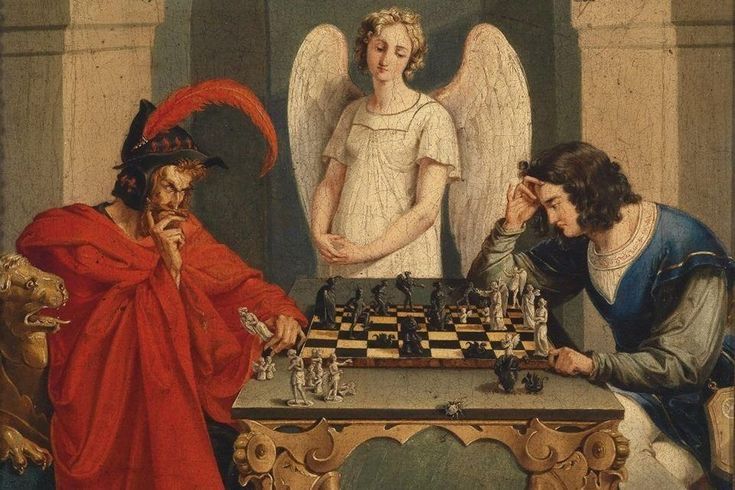
The Devil's Checkmate by Friedrich Moritz August Retzsch
(View Full Image)There is No Checkmate
December 29, 2025
We are hardwired to recognize endings. We see the sunset and call it the death of the day, we see the horizon and, for centuries, we believed it was a literal ledge where the ocean fell into nothingness. Our brains are survival machines designed to look for where it all cuts off, the moment where effort becomes unnecessary, and resignation quite acceptable. We call this moment the end. In medicine, it’s a terminal illness. In finance, it’s running out of money. In the spirit, it’s the dark night of the soul, and endless despair.
But history tells a different story. The horizon isn't a wall, it’s a limitation of sight. The most dangerous trick of the human condition is the belief that because we cannot see the next step, it does not exist. In the study of logic and games, there is a phenomenon known as the "Overloaded Guard." It occurs when a single force, be it a person, a system, or a tragedy, seems to control every square of your life.
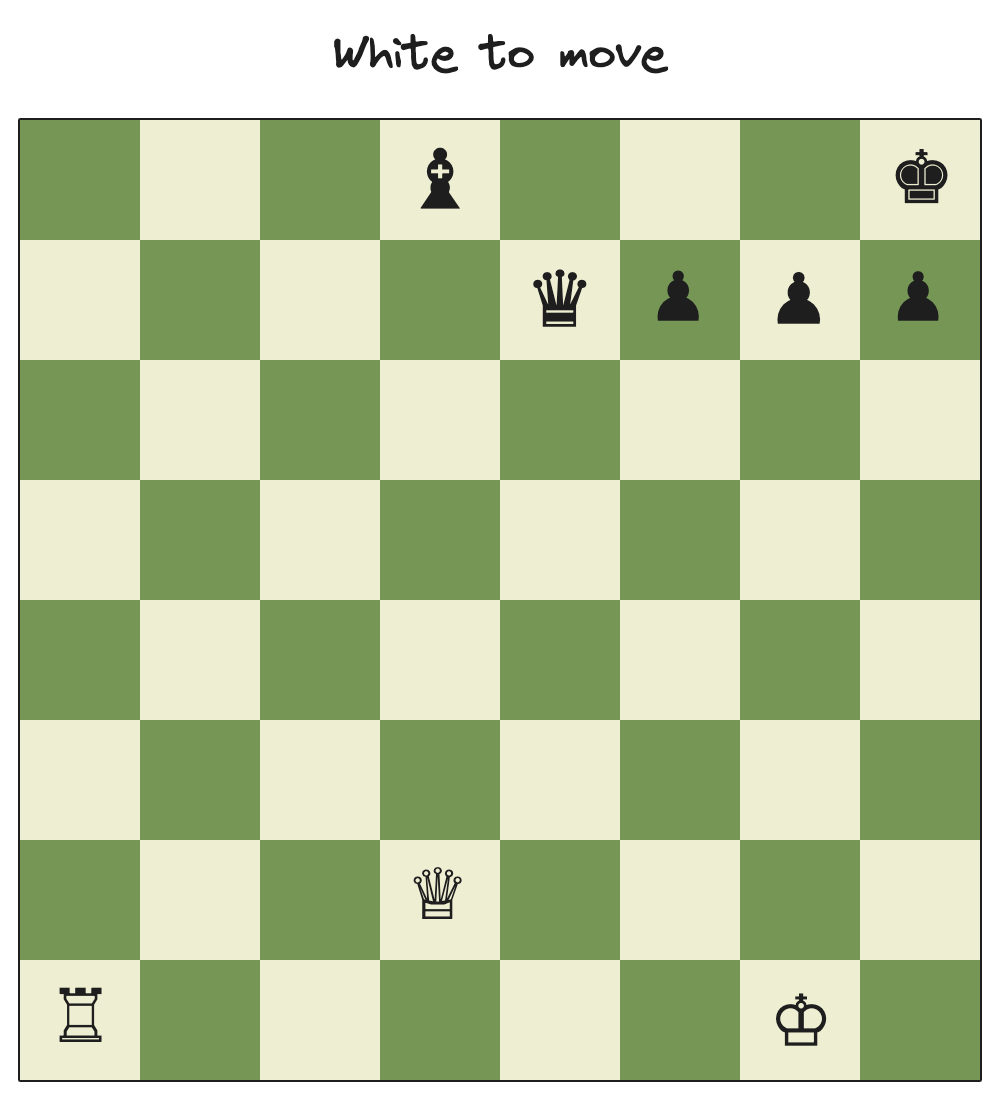
Take, for example, a classic chess study: White is under siege, and the opponent’s Queen appears to be a god on the board, guarding every path to safety. To me, the position is a tomb. But the "winning" move is Qd1. A quiet, counterintuitive retreat. By stepping back, White realizes the opponent’s strength is actually its weakness; the guard is carrying too much weight. By refusing to attack the front door and instead stepping into the shadows of a new perspective, the entire "impossible" situation collapses.
This is the "Quiet Move" of the human spirit. It is the realization that when you are blocked in every direction, the solution isn't to push harder, it's to change the geometry of the struggle. Life is fundamentally different from a game of chess because life is open-ended and asymmetric. The board we play on is not fixed.
In 1940, the fall of France looked like a final checkmate for democracy. The rules of the game were dictated by Blitzkrieg. But the game didn't stay on land, it moved to the air, to the code-breaking rooms of Bletchley Park, and into the hearts of ordinary people. The rules changed mid-match.
In a game, it’s just you and the opponent. In life, a stranger’s hand, a scientific breakthrough, or a sudden shift in the wind can introduce a new "piece" to your board. You are never playing a truly isolated game.
Sometimes, the winning move is simply to remain at the table. In the AIDS crisis of the 1980s, the checkmate seemed absolute. But the move was to survive long enough for the science to catch up. Time isn't just a clock running out, it’s a field where new possibilities grow.
The only way to truly lose is to accept the illusion of the horizon.
The devil’s greatest weapon isn’t the tragedy itself; it’s the prompt to resign. He wants you to look at your “overloaded guard”, the mountain of debt, the broken relationship, the grief that feels like a physical weight, and conclude that the board is frozen.
But if you are still breathing, the board is still in motion. Your current crisis is not a wall, it is a chance for you to play Qd1. It is an invitation to step back, to breathe, and to look for the tiny, quiet move that you may have missed.
The horizon is moving as you move. Don't quit just because the lights are low. Look at the board again. There is a move. Find it.